Wednesday, 3 February 2021

Heavy snow

Essential maintenance

Was foreseen for Saturday, but on the eve the weather forecast was so dire (heavy snow, and windy) that we wisely decided to reschedule by one week.

Hence we should be looking at a new method for fishplate greasing on Saturday - stay tuned! It's got to be better than the current slow and laborious one, we can't wait to see.


We do have a couple of pictures of the next completed section of concrete on the unloading road at Toddington:


From the south, it looks almost finished from here, but there's another section to go.


From the station end. Note the missing sliding door under the awning, which we hope to replace after repair or even replacement, if we can find the money. 


The third and final section of the unloading road still needs some adjustment to the levels, something that should be tackled next week.


Derbyshire in colour, in 1963.

We continue with Derek Palmer's wonderful slides of 58 years ago, still in Derbyshire. Here is his report for the next set of slides:

For the final episode from my week in Derbyshire in 1963, we are starting with a picture of an LMS 4F 0-6-0 44262 hauling a northbound freight passing through Darley Dale station on the former Midland mainline from Derby to Manchester.

Fowler 4F 44262 was a bit of a veteran, being built in 1926 and lasting until September 1963, a bit after Derek took the picture. It was built, and at the end of its life, cut up at Derby. It seems to have spent its whole life at Rowsley and it the picture it carries that shedplate, 17C.

This looks like a long mixed freight train, and at the next stop at Rowsley shed a banker would very likely be attached - see the picture of Monsal head viaduct below. Strangely the headlamp code - one lamp at the top - seems to say 'Ordinary passenger train', clearly not the case here.

Today both of the buildings at Darley Dale survive, although the main building on the right is owned by a third party, is currently empty and could be at risk. The stonework is grimy and black. A suggestion a few years back to the Peak Railway to clean the up side building was roundly rebuffed - stonework in the industrial north is black! Go away.

The footbridge was removed for re-erection at Butterley. However, that idea failed and it was advertised for sale in 2009, was recovered and returned to Darley Dale. There are firm plans in hand to re-erect it where it was, by the level crossing.

 Note that a train is signalled both ways - this was a busy line!

Next are four views of the disused Bunsall incline on the Cromford and High Peak Railway. This was first operated as two separate inclines, the lower one with a gradient of 1 in 7.5 and the upper one with a gradient of 1 in 7. They were amalgamated into one incline in 1857 but this part of the line was abandoned in 1892 following the opening of the new line from Hurdlow to Buxton by the LNWR. 

The first view (below L) is taken from the top of the incline with the Goyt Reservoir in the distance. The C&HPR line ran alongside this reservoir on its way to Whaley Bridge.


The second view (above R), also at the top of the incline looking the other way and the some of the remains of the former railway and buildings can be seen.

Then two views taken half way down the incline that give a good indication of the gradient. What I was also looking for here was any clue to the remains of the experimental railway to tackle inclines built by the Victorian engineer John Barraclough Fell. He reportedly built a test track in 1862 adjacent to this incline and at one point passing under it. His principle employed a centre rail between the two running rails. The centre rail was gripped on either side by wheels on the locomotive.


The best I could find was this little bridge under the Bunsall incline that you can see in the second of the views, but was probably wishful thinking that it was anything to do with Fell's railway.

The next view is of a freight train somewhere between Hurdlow and Buxton. Perhaps the background might give a clue. Any ideas gratefully received.

Whilst in Derbyshire on my bike and with a 1 inch to 1 mile Ordnance Survey map I followed as closely as I could the Derby to Manchester Midland mainline. At Ashford in the Water I looked at my map and took off along a road which looked as if it would cross the railway line somewhere ahead. Suddenly I arrived on a scene which left me spellbound.


I was at Monsal Head overlooking the Wye Valley where the railway line emerged from Headstone Tunnel onto Headstone Viaduct. These three shots were my reward. I have long mused on this moment and the thrill that if gave me. How different it would have been if I had been studying a tourist brochure of the area before my visit. That magically moment would have been lost to me because I would have known it was there and seen it in my mind's eye beforehand. Of course this line is now on the Monsal Trial for cyclists and walkers and Headstone Viaduct is a popular subject of publicity material.


This looks like a 'Peak' with a maroon passenger train from Manchester to London. One forgets that this was once a main line.

For comparison, here are two shots of Monsal Head viaduct, taken in more recent times:

The bare trackbed is now a cycle trail. It's a lovely walk from this vantage point by the hotel down into the valley, across the little bridge centre right, and up on to the trackbed.


You then cross the viaduct, walk through the tunnel and the rocky cutting at the other end, and back to your starting place at the top.

Slightly disturbing were the loose bricks lying on the floor of the tunnel, which had fallen out of the lining (this was in 2015 and may have been resolved since then).


Lockdown quiz

Here is another tricky quiz for you, and our thanks go to Jim H who prepared it, and allowed us to use it:


Lockdown Quiz 3

1. There were 30 Kings class locomotives built at Swindon between 1927 and 1930. How many were re-named during their GWR/BR working lives and what were the names involved?

2. Why was Merchant Navy 35019 French Line CGT unique?

3. What was the original name carried by A4 4469 destroyed in an air raid at York in 1942 when named Sir Ralph Wedgwood?

4. What is the difference between a “catch point” and a “trap point”?

5. In a mechanically signalled area what does a white diamond on a signal post indicate to the driver?

6. What is the tallest class of British steam locomotive when measured from top of rail to top of chimney?

7. Which is the “odd man out” amongst the following and why? (a) A4 (b) Coronation and (c) Merchant Navy

8. How many LMS Stanier Class 5 4-6-0s were built?

9. When was 3rd class accommodation renamed second class on BR?

10. The BR emblem fixed to locomotives and rolling stock consists chiefly of a lion mounted on a crown and holding a railway wheel. Should the lion face the front of the locomotive or train, or to the right or the left?

11. Where were the highest water troughs in Great Britain situated?

12. Where and how long is the longest tunnel on the main BR network?

13. Where and how long is the longest section of straight track in Britain?

14. Which was the first BR locomotive to appear in the rail blue livery in May 1964?

15. How many Brush type 4 (BR class 47) diesel-electric locomotives were built for British Rail?

16. What indignity was suffered by Stanier class 5 no 5212 on a filming assignment at the K & WVR railway in February 1969?

17. Which former GWR King class 4-6-0 was the first to be fitted with a double chimney in September 1955?

18. What do the following locomotives have in common? (a) 5086 (b) 61241 (c) 7000 and (d) 111

19. Who presented the bell carried by A4 60010?

20. Which motive power depot was allocated a shed code normally associated with one region whilst being physically located in a different region?


Answers next week, see you then!


Wednesday, 27 January 2021

Essential maintenance

Toddington - the unloading road.

Work on this was paused during last year, but its half finished state is an operational hindrance, and a bit of a safety hazard for people using that bit of the yard (mainly contractors finishing off the mess room).

It was therefore decided to complete the concreting job, using a contractor and a couple of volunteers to prepare it. An initial section was concreted a week ago, as in the picture.

Here is the section completed last week. It includes the area between the containers and the mess room extension, on the right.


The canopy team was then requested to place the edging strips that they had made (we are not allowed to work on the canopy completion as it is not 'essential') and here they are carrying out the strips which were then welded (temporarily) to the running rails.

Today the concrete supplier came again, this time working from the car park end. Here is the concrete pump, and the lorry making on the spot concrete for it.

At the business end of the supply pipe the concrete started to come out in spurts, and it was raked level by the contractors.


Around lunch time this is as far as they had advanced. In the foreground is a cross drain which will take away the water that used to stand in large puddles along here. By the end of the day it was hoped to reach the sliding door of the goods shed, leaving a third and final section still to do.

Before the concrete came, Neal and yours truly hurriedly dug out the guide rail below the original sliding door along the side. It was about to be buried in 9 inches of concrete. The guide rail is of cast iron and was set in granite blocks, which proved a challenge to undo without damage, but we got there.

On the left the cast iron guide rails after removal, om the right Neal struggling the granite blocks, trying to recover the rail without breaking it. Now it is safe, and we plan to refit it into the new concrete once it has gone off.


 A quick look into the loco shed shows these two bits, marked with a large L and R. Well, that's clear. They are off 2807. Is this what they call 'stuffing boxes'?


Outside the new mess room - still being fitted out as we write - here is a detail of the new replica lamps. We are very pleased with the quality. These have a door underneath, rather than on top, such as the budget ones we fitted at Broadway. You can also get them with the correct side doors.


Finally a picture from Sunday, when there was a light snowfall:

The Cotswolds Edge is still pretty, despite winter and lockdown. This picture was taken near Dover's Hill on Sunday. We have to do regular walks, as staying at home and writing blogs is clearly fattening. Sadly.


Cromford & High Peak in colour

Derek continues with his tales of steam in 1963.

Continuing with my bike tour of Derbyshire and here are some more views of the Cromford & High Peak Railway in July 1963.


Between the top of Sheep Pasture incline and the bottom of Middleton incline the railway passes a massive outcrop known as Black Rocks.


The next view is taken from the top of Hopton Incline which was originally operated with a winding engine similar to the other inclines but in 1877 it became single track and relied on locomotive power to ascend the 1 in 14 gradient. It was still in use at the time of my visit but I did not capture any workings. There was an occasion when a derailment occurred on the approach to the foot of the incline when, taking a run at it, the locomotive became derailed by spreading the track through excessive nosing, unfortunately with fatal consequences. 


I mentioned last week how the route has characteristics similar to those that might have been found with a canal. Below is Gotham Curve which has a radius of 2.5 chains and turns the line through 80 degrees.


Continuing northwest here is Hindlow tunnel on part of the route that the LNWR straightened out and doubled the track.


Getting closer to the end of the original route and the part of the line that had been abandoned, and here is the north portal of Burbage tunnel. No, I didn't fancy looking beyond the tunnel mouth. It was very dark. 


Back on the section of line upgraded by the LNWR and 4F 0-6-0 44339 is seen shunting at Parsley Hay. Just south of here the upgraded line diverges towards Ashbourne, away from the original C&HPR route.

LMS 4F 44339 shunting at Parsley Hay and its wooden platforms.


 For our classic diesel friends:


Whilst still on my week in Derbyshire I also spent time looking at the Derby to Manchester Midland mainline. A chance bonus at the beginning of a new film and I pointed the camera expecting to get a blank picture, but instead here is a Peak class heading north light engine, near Rowsley.


Then a walk to Haddon Tunnel by an obscure (!) route gave me the next three pictures. First, heading a southbound freight approaching the tunnel, is ex WD 2-8-0 90204.

Turning to face the tunnel mouth Standard Class 5 73137 is heading a northbound freight.

I guessed that this would have a banker, so with camera at the ready..... lo and behold Fairburn 2-6-4T 42225 arrived. I am sure the crew were relieved to be back out in the fresh air.


The same scenes today give these pictures:

WD 90204 came along here, at the tunnel's upper end.


The western approach to Haddon tunnel, with the former headshunt on the right in the bushes.


Here is where 73137 came out of the tunnel mouth, and again that headshunt on the right.

Note how shallow the tunnel roof is.

This is because there was actually no need for the tunnel, the owner of Haddon Hall just wanted the trains to disappear while passing through his property. So the line runs behind the hall, underground but only just, for just over 1000 yards.

Haddon Hall today. Worth a visit, despite the aversion to steam.

Also, as an update to Derek's 1963 pictures of the Middleton Top incline, here are two pictures from 2015 which show the situation today:

A wagon by the Middleton Top engine house, with the incline falling away steeply by the signal.
The engine house still exists, and you can rent cycles here to follow the old trackbed.

Middle Peak quarry
You can also see the chimney of Middleton Top engine house in this picture, taken across the gigantic quarry after a short walk up from Wirksworth village, home to the EVR.


Turntable update

Good progress has been made with finding this a new home. Two candidates stepped forward to take it over as a job lot, and a final selection has now been made. We now await arrangements to have it moved to its new owners. We won't give the name away for the time being, but they may well make this known by themselves.

An on-site inspection took place today to take some measurements, and to find out exactly what there is. We also had a party interested in the vacuum motor alone, but that was not a feasible option. First of all, the turntable was offered and taken as a job lot, and secondly the inspection today revealed that the vacuum motor is an integral part of the structure, and cannot be removed from it. It's not just a bolt on power unit, but the drive on it forms one of the four wheels underneath. You can't take that away on its own.

Here are some pictures of the vacuum motor, which we found an interesting piece of technology:

The vacuum motor, inside.

Maintenance instructions


Operating instructions


This is why vacuum motor and turntable can't be separated. The cogwheel on the right is connected to the running wheel on the left, which is one of 4 that run along the ring rails.

The vacuum supply hose is in the foreground.

Do you 'supply' a vacuum ??? It sucks, doesn't it?


If you look closely you can see that the running wheel was not positioned correctly on the ring rail during its service life, and the ring rail has bitten into the cogwheel that is driven by the vacuum motor.

We also found that the motor was supplied by Cowans Sheldon of Carlisle, but the main running wheels are marked Ransomes & Rapier, Ipswich. Was the motor sub contracted, or did the firms merge / work together? The worksplate is no longer there to see.


More next week.

Wednesday, 20 January 2021

Eastbank

Eastbank....

 .... was the name of the stationmaster's house in Broadway when it first set up as a B&B in 1979. We had a nice email - we always appreciate emails with a bit of history, especially if there are old pictures attached - as a result of the last blog, which featured a picture of Pannier 8491 at Chalford. This prompted Neil Evans to send us a bit of history of the stationmaster's house, after the station closed.

By way of background we give below a picture during the time the first new people, the Eaketts family, owned it, having bought it off a property company in the 1960s after the station closed to passengers.


Trackside view of the former station site in the 1970s, with the new brick wall and the Eaketts' Wolseley parked below the house
 From the Tony Harden collection.


Station forecourt, showing the new brick wall for the lower car parking area of the stationmaster's house
 From the Tony Harden collection.


Stationmaster's house from the rear in the 1970s


Copyright: Lorna Eaketts.


Stationmaster's house, Christmas 1979. A sectional concrete garage has now appeared on the left.
Copyright: Neil Evans.


Neil explains:

My brother and his wife purchased the Station Master's house at Broadway (then called "Eastbank") in the late 1970's and for many years ran it as a B&B. I remember that not long after he bought it, the GWSR had started re-building the railway at Toddington and I asked him if he was looking forward to the railway and station being reinstated at Broadway; he replied "nothing will ever be built at the bottom of my drive". Sadly, he is no longer alive, but I wonder what he would make of the fantastic heritage development the GWSR has now created at Broadway?

With respect to the Broadway stationmaster’s house, my brother purchased the property in, I believe, 1979 and whilst I was working away in the middle east. Consequently, I never had the opportunity to meet the previous owners (Mr & Mrs Eaketts) and indeed, I never heard my brother mention that particular name. My brother and his wife significantly extended the house in the early 1980’s and ran a B&B business from there until they moved away in the early 2000’s. Over Christmas 1979, I stayed with them whilst on leave and took the photo of the house from the Platform 2 side of the GWSR trackbed. You can see this photo shows the empty trackbed, the original concrete and wire fence between the GWSR trackbed and their property (later replaced by the current leylandii hedge) and the original sectional concrete garage halfway up the drive. This was later replaced by an underground garage closer to the side of the house. Unfortunately, I don’t think I have any further information about the house that would be of interest to your members.


 In the early 1960's I lived in Hereford and frequently travelled to Gloucester with a school chum to train spot at the Central and Eastgate stations and at Horton Road shed. I saw 8491 twice in 1963 at Horton Road shed, and on the second occasion (early June I believe) managed a cab ride on the loco as it was being prepared prior to leaving shed for transfer freight duty. As you record, it was withdrawn from service on 13th July 1963 and I never saw it again. Interestingly, as you probably know, the Chalford service was usually an auto train hauled by either 14XX or 64XX tanks. Occasionally, when an auto fitted engine was not available, a standard tank and coaching stock would be substituted. One such instance is illustrated on page 156 of "Western Region Steam 1950 - 1965" by Mike Arlett & David Lockett and the engine photographed approaching Brimscombe Station on 22nd May 1961 is none other than 8491.


I was most interested to read your latest posting and in particular to see the pictures of Hawksworth pannier 8491.

When I retired in 2015, I decided to treat myself to a 5" gauge steam locomotive and bought a pre-machined kit for ...... a Hawksworth pannier tank. Completed in 2016 and painted black, it now has cab and smokebox number plates as 8491, with an 85B shed code. So, in a manner of speaking, pannier 8491still exists!! See attached photos.


Regarding the picture of 4161 heading the Oxford University Railway Society tour at Gloucester Central, this engine was a regular engine on the Hereford to Gloucester services. This line, with its tunnels, spectacular bridges over the River Wye and picturesque wayside stations was my favourite cross country route at the time, but sadly little now remains to show its existence. Returning to 4161, I was fortunate that on 7th August 1964 the Hereford driver of this engine agreed to give me a cab ride between Grange Court Junction and Ross on Wye - a memorable experience, especially the passage of the 771 yard long Lea Line Tunnel!

Best wishes,

Neil Evans


Derek's 1963 colour railway photographs

This week we're going to Derbyshire, with an exciting visit to a steeply graded railway line - the Cromford & High Peak Railway. Derek's got quite a story about it. He says:

During a day's shed bashing trip to Derbyshire in the second half of the 1950s with the local railway enthusiasts from Oxford, the organiser asked the coach driver to stop on the A6 at a point which seemed to be of no particular interest. He then got out and walked back a bit and gazed over the parapet of a bridge, got back on the coach and told us what he had been looking at. It being a main road with nowhere to leave the coach and the fact that we had an itinerary to keep, we had to be content with him telling us what he had been so interested in seeing. Intrigued, I subsequently bought a book describing the Cromford and High Peak Railway. It took me until the summer of 1963 to getting round to visiting the area and taking a week's holiday to explore the railway for myself. I took the train from Oxford to Matlock with my bike, and then cycled to my base for the week, bed, breakfast and evening meal at a cottage in Monyash.

The Cromford and High Peak Railway ran from the Cromford Wharf of the Cromford Canal to the Peak Forest Canal at Whaley Bridge. The idea being to provide access to Stockport and Manchester for industrial and agricultural products from the Midlands. In the 1820s when the plans for the route were drawn up the thinking was still towards it being a canal. The contours posed a considerable challenge with the route. The Cromford end was 277ft above sea level and the other end 33 miles away at Whaley Bridge was 517ft above sea level. Not too bad until you take into accounts the fact that at the highest point it was 1264ft above sea level, so many flights of locks would be required. Providing an adequate water supply was going to be a problem. It was not surprising then, with railways coming into play in other parts of the country at this time, it was decided to build it as a railway instead. However, the design of the route did have the same characteristics as a canal, with inclined planes, nine in all until a couple where amalgamated later on, and a tortuous route with many sharp bends. Work started in 1825 and the eastern half from Cromford was opened in 1830 with the rest of the line opening a year later.


The gradient of the different inclined planes was between 1 in 7.5 and 1 in 14. All but the latter were double track and worked by steel cable, or when first constructed, by chain. At the top of each incline there was a winding house with a winding engine driven by a stationary steam boiler. Although one 'engine' at the incline at Whaley Bridge was a horse and a capstan. The idea was that, as far as possible, compensating loads would be going up and down at the same time. When first constructed the line was operated with horses but steam locomotives began to take over from 1833.


The line had many sidings serving quarries and limestone works, with the transport of goods associated with that. For a while there was also a passenger service, with a 'fly' coach attached to a train. The journey from end to end took five and a half hours and the passengers had to walk up and down the inclines.


The line also provided a means of supplying coal and water to the inhabitants and industry along the line and of course, not least for supplies to run the railway itself.


In the latter half of the nineteenth century the LNWR took over a central portion of the line, straightening it out and easing the gradients, and doubling the track, it then forming part of the line from Ashbourne to Buxton. With this development, parts of the northwestern end of the line were abandoned, there being an alternative route to Whaley Bridge and Stockport.


Looking at the Sheep Pasture incline at Cromford as an example, this was 1 in 9 and 1 in 8 and 1320 yards long. The descending loads were limited to a total of thirtyeight tons. The load would be prepared at the top of the incline and a couple of hefty pivoted blocks of wood would be swivelled under the wagon wheels to prevent accidental runaway. The trailing wagon would be attached to the steel cable with twin lengths of chain which would be 'plaited' round the cable with deft repeated flicks of the wrists, and finally two or three leather straps would be tightened round the ends of the chain. Signalling to the bottom end of the incline would be done by a series of bells and pointers. Once ready to descend, the pivoted blocks would be knocked away from under the wheels. There was a catchpit near the bottom of the incline where, if the points were not directed to the line around it, the wagons would end up in the pit, albeit completely wrecked. There was a pointsman in a cabin alongside here and he would be alerted to the speed of descent of the wagons by a gong which would sound repeatedly as the wagons passed triggers on the descent. The pointsman could judge if there was a runaway by the frequency of the gong sounding. There was an occasion when this catchpit served its purpose with not much left to recover from the wreckage.


There wasn't always a catchpit. There had been at least one runaway before this was installed. The wagons involved took flight at the bottom, clearing the canal and the mainline and ending up in the field beyond. Even after the catchpit was installed there was a runaway after the wagons had successfully passed it, with not quite so dramatic consequences.


My visit took me to those parts of the line that were still operational and also a look at some of the abandoned parts as well.


Here is a series of pictures all taken at Sheep Pasture incline. The first picture shows a run of two wagons just sent on their way with the chain plaited round the steel cable. The massive blocks of wood used to keep the wagons in place prior to departure can be seen in the foreground.


Then another wagon is sent on its way down.


Next is a wagon just about to reach the top.


Then (LH picture) near the bottom of the incline looking up, a run is ascending past the catchpit. Viewed from this angle the catchpit does not seem much but the business side is a bit buried.


This is followed by a run coming down passing the catchpit (RH picture). The pointsman's cabin is alongside the points where the line diverges.

The previous two views were taken from the bridge which carries the A6 over the incline. 

Derek also sent three more current pictures taken in 2002 


This one shows the catch pit near the bottom of the incline, with the A6 road bridge in the background, from which the pictures looking up in 1963 were taken. The little square hut features in both the old and the more recent pictures


A shot of the tunnel at the bottom, which is actually the A6 road bridge.


This picture was taken from the incline side of the road bridge, looking down to the foot of the incline on the other side of the bridge. If you zoom in on the picture you can see the rails that are in the picture featured above that one.


.


Now back to 1963:

This view is looking the other way down the incline from the bridge. This is the bottom of the incline with the line then curving away to the wharf.


Back at the top of Sheep Pasture incline 0-4-0ST 47007 is in the sidings. The line on the left leads to the incline. The top of the winding house can be seen behind the loco.

Loco 47007 looks a bit like an Austerity from the front, but was actually an 0-4-0 LMS design built at Horwich in 1953 for BR. It floated round Birkenhead and Derby for a few years, before finishing its short 10 year career at Rowsley shed. It was withdrawn at the end of 1963, a few months after Derek's visit. 

Middleton incline is the next incline along the line. This is 800 yards long with a gradient of 1 in 8.25. I didn't see any activity on the occasion of my visit but it was still in regular use then.


I believe the winding house and engine is now kept as a monument and is next to the start of a cycle trail along part of the former railway.

A bit further along the line is Hopton Tunnel.


Continuing west is Longcliffe. I mentioned the use of the line to supply water. Here are two ex LNWR tenders in use for that purpose with another unrecorded 0-4-0ST at the head.


Further reading: The Cromford & High Peak Railway by Alan Rimmer. Locomotion Papers Number Ten published by the Oakwood Press 1956.

Further viewing: https://www.youtube.com/watch?v=UiCyDXG50qw&t=588s


Bratton Fleming station / Exmoor Associates Ltd

Bratton Fleming station is now in secure L&B friendly hands, and the tenant is in, and loves it there. Now it's generating an income too. As soon as there is better weather, and regulations allow it, they plan to hold an open day there. The site is very restricted and you can't park anywhere, so people may need to park in the village and walk down, much as passengers were once expected to do.

Exmoor Associates Ltd is a bunch of guys who clubbed together to buy, patiently, parts of the old trackbed for eventual reinstatement of the line as / when they come up for sale. So you might get many months without news, and then suddenly there is a burst of activity. And here comes an example of the latter!

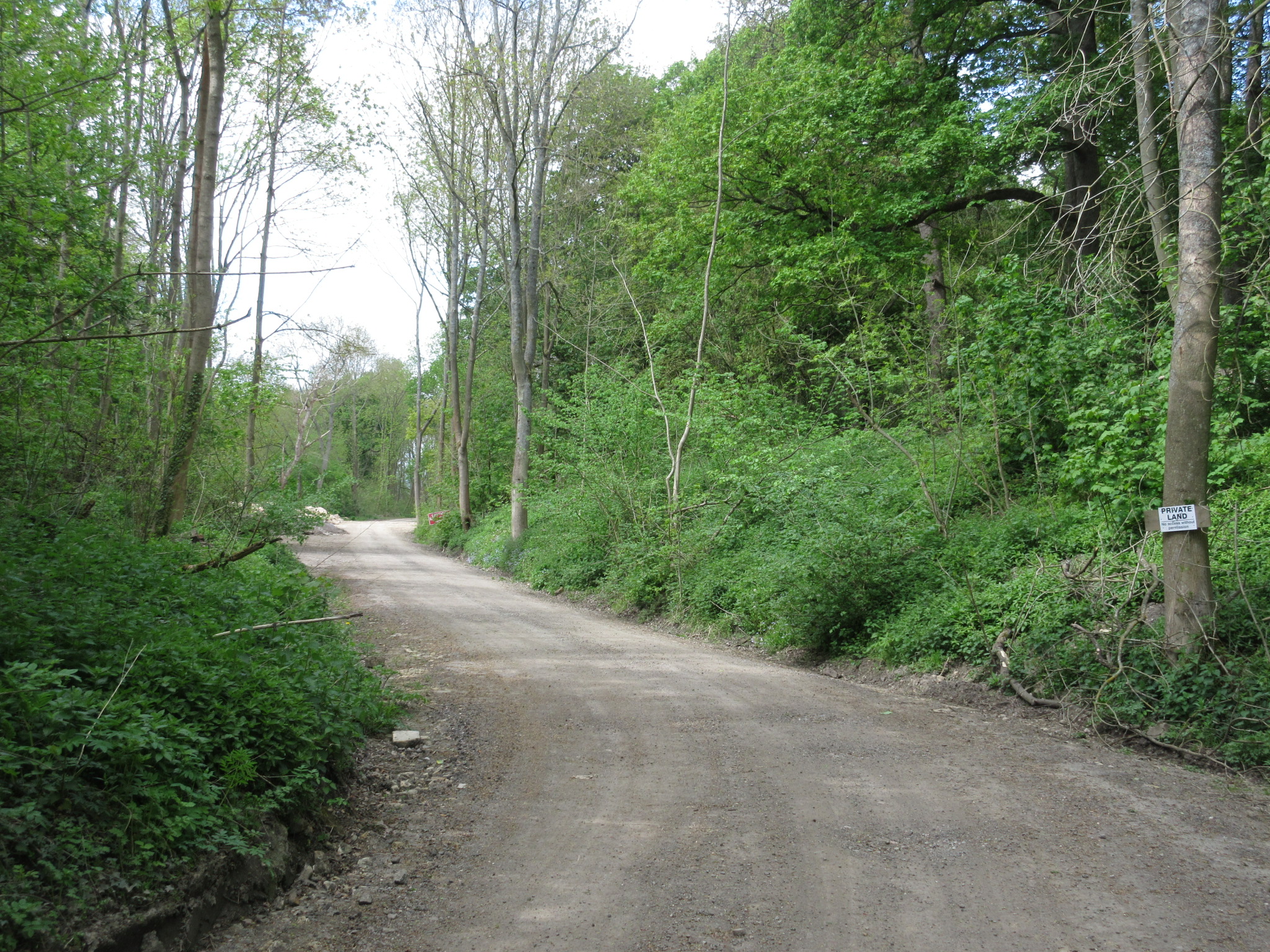
Part of the trackbed that has become available to buy.
Quite a stretch of the trackbed (once chopped up into 100 or so bits in the 1930s) has just become available, but the little company exhausted itself on the purchase of Bratton Fleming station. They raised about 70% of the cost from new public contributions, but still had to cover the last 30% from the remaining resources of the company. Now the war chest is empty. And then, just as the first tenant moved in, another opportunity has arisen. Like the No.9 bus, you wait ages, then three come at once.

They don't want to say exactly what and where, as conveyancing is very slow at the moment and they don't want the deal to be snapped from them, but we can say that it is above Bratton Fleming, somewhere between there and the reservoir at Whistlandpound. They don't want it sold to someone else as a future ransom strip, so negotiations are always very delicate.


Here is the relevant extract from their newsletter, which shareholders receive whenever there is something exciting to say:

Another Opportunity for More Trackbed

After just recovering from the frantic efforts in purchasing Bratton Fleming Station and having a feeling of calm at last, we then had a phone call from a local land agent with whom we have dealt before, offering a considerable length of trackbed not that far from Bratton Station.

Having invested a considerable amount of money in the purchase of Bratton Station our bank balance is sadly now depleted, and coming so close to this massive expenditure we just haven’t had the time to replace those funds.

So we return to you for help once again; needless to say we don’t want to lose this vital section, and once again we are selling Exmoor Associates shares. We can go a long time with nothing being available then all of a sudden several sections become available at once.

Exmoor Associates will use all the platforms available to get the appeal out to the widest newest audience as possible. 

The Directors realise that everyone’s financial position is different as far as supporting us, so we have tried to put in place something to suit all.

Shares continue to be issued as usual in blocks of £100 but we are equally happy to accept £10, £20 etc. a month until £100 pounds is raised for a registered shareholding. See below for details.

These are very exciting times for Exmoor Associates but realise if our endeavours are to be achieved in the long-term we will need to have fresh ideas to tackle some of the more difficult sections of the former Lynton and Barnstaple Railway in the southern part.

We will be shortly announcing one of those ideas and you will be first to hear.

Finally thank you in anticipation of your help with this. It is not ideal timing we know but out of our control.

A Go Fund Me page will not be used this time, as a precentage is deducted from donations, and there is a potential tax issue for the company. Share purchases are the simplest way at the moment.

So this is what you need to do, if you want to help buy the stretch of trackbed:


For existing share holders to purchase additional shares all that is needed is to make a BACS payment using the details below.

Exmoor Associates Ltd.

Sort Code: 30-93-08

Account No. 01550790

To set up a standing order use these details or send a cheque to the address below.

The Company Secretary

Exmoor Associates Ltd.

Edgemoor, Moorland Close

YELVERTON PL20 6DD


New shareholders should get in touch with the Company Secretary in order to receive a copy of the Shareholders’ Agreement, consent form, and data protection and privacy policy. By post or email to tony @ exmoor-associates.co.uk    (remove the 2 blanks)


Yours truly has answered the call with another bunch of shares. Once you are a shareholder, buying more is easy - just make a bank transfer. If you want to help save this piece of trackbed, then perhaps you'd like to do the same?

See you next time!